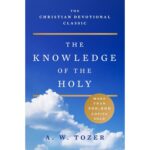
by A.W. Tozer, 1978
This book was recommended by Aaron Stearns, pastor of Mill City Church, at the start of the sermon on the Gospel of John, Chapter 4, The Woman at the Well. Jesus was tired and he was thirsty: 100% human, 100% God. The copy I got from the Englewood Public Library was copyrighted 2018 by Indo-European Publishing (not the version pictured above). There are a lot of typos in this version.
The book is made up of 23 short chapters delving into different attributes of God. I think most of these are from sermons or articles he wrote in the 1950’s. He acknowledges that it is not complete but he wrote this because he saw the church in America had completely forsaken the holiness of God. Here are the attributes he discusses: Trinity, Self-Existence, the Self-Sufficiency, Eternity, Infinitude, Immutability, Divine Omniscience, Wisdom, Omnipotence, Divine Transcendence, Omnipresence, Faithfulness, Goodness, Justice, Mercy, Grace, Love, Holiness, Sovereignty.
I have sticky notes on every page.
In the Preface:
“The Church has surrendered her once lofty concept of God and has substituted for it one so low, so ignoble, as to be utterly unworthy of thinking, worshipping men.”
“It is impossible to keep our moral practices sound and our inward attitudes right while our idea of God is erroneous or inadequate.”
“It is my hope that this small book may contribute somewhat to the promotion of personal heart religion among us; and should a few persons by reading it be encouraged to begin the practice of reverent meditation on the being of God, that will more than repay the labor required to produce it.”
Chapter 1: Why We Must Think Rightly About God
“What comes into our minds when we think about God is the most important thing about us.”
“The man who comes to a right belief about God is relieved of ten thousand temporal problems, for he sees at once that these have to do with matters which at the most cannot concern him for very long; but even if the multiple burdens of time may be lifted from him, the one mighty single burden of eternity begins to press down upon him with a weight more crushing than all the woes of the world piled one upon another. That mighty burden is his obligation to God. It includes an instant and lifelong duty to love God with every power of mind and soul, to obey Him perfectly, and to worship Him acceptably. And when the man’s laboring conscience tells him that he has done none of these things, but has from childhood been guilty of foul revolt against the Majesty in the heavens, the inner pressure of self-accusation may become too heavy to bear.
“The gospel can lift this destroying burden from the mind, give beauty for ashes, and the garment of praise for the spirit of heaviness. But unless the weight of the burden is felt the gospel can mean nothing to the man; and until he sees a vision of God high and lifted up, there will be no woe and no burden. Low views of God destroy the gospel for all who hold them.”
“The first step down for any church is taken when it surrenders its high opinion of God.”
Chapter 2: God Incomprehensible
“In Christ and by Christ, God effects complete self-disclosure, although He shows Himself not to reason but to faith and love.”
Chapter 3: A Divine Attribute: Something True About God
“What is God like? What kind of God is He?…”
“”For He willeth that we be occupied in knowing and loving,” wrote Julian of Norwich, “till the time that we shall be fulfilled in heaven…”To our questions God has provided answers; not all the answers, certainly, but enough to satisfy our intellects and ravish our hearts. These answers He has provided in nature, in the Scriptures, and in the person of His Son.”
Chapter 4: The Holy Trinity
“God of our fathers, enthroned in light, how rich, how musical is the tongue of England! Yet when we attempt to speak forth Thy wonders, our words how poor they seem and our speech how unmelodious. When we consider the fearful mystery of Thy Triune Godhead we lay our hand upon our mouth. Before that burning bush we ask not to understand, but only that we may fitly adore Thee, One God in Persons Three. Amen.
“To meditate on the three Persons of the Godhead is to walk in thought through the garden eastward in Eden and to tread on holy ground. Our sincerest effort to grasp the incomprehensible mystery of the Trinity must remain forever futile, and only by deepest reverence can it be saved from actual presumption.”…
“Thomas Carlyle, following Plato, pictures a man, a deep pagan thinker, who had grown to maturity in some hidden cave and is brought out suddenly to see the sun rise. “What would his wonder be,” exclaims Carlyle, “his rapt astonishment at the sight we daily witness with indifference! With the free, open sense of a child, yet with the ripe faculty of a man, his whole heart would be kindled by that sight…. This green flowery rock-built earth, the trees, the mountains, rivers, many-sounding seas; that great deep sea of azure that swims overhead; the winds sweeping through it; the black cloud fashioning itself together, now pouring out fire, now hail and rain; what is it? Ay, what? At bottom we do not yet know; we can never know at all.”
“How different are we who have grown used to it, who have become jaded with a satiety of wonder….”
“…Secularism, materialism, and the intrusive presence of things have put out the light in our souls and turned us into a generation of zombies…”
“What God declares the believing heart confesses without the need of further proof. Indeed, to seek proof is to admit doubt, and to obtain proof is to render faith superfluous. Everyone who possesses the gift of faith will recognize the wisdom of those daring words of one of the early Church fathers: “I believe that Christ died for me because it is incredible; I believe that he rose from the dead because it is impossible.”
…”Love and faith are at home in the mystery of the Godhead. Let reason kneel in reverence outside.
“Christ did not hesitate to use the plural form when speaking of Himself along with the Father and the Spirit. “We will come unto him and make our abode with him.” Yet again He said, “I and my Father are one.” It is most important that we think of God as Trinity in Unity, neither confounding the Persons nor dividing the Substance. Only so may we think rightly of God and in a manner worthy of Him and of our own souls.
“It was our Lord’s claim to equality with the Father that outraged the religionists of His day and led at last to His crucifixion…”
“A popular belief among Christians divide the work of God between the three Persons, giving a specific part to each, as, for instance, creation to the Father, redemption to the Son, and regeneration to the Holy Spirit. This is partly true but not wholly so, for God cannot so divide Himself that one Person works while another is inactive. In the Scriptures the three Persons are shown to act in harmonious unity in all the mighty works that are wrought throughout the universe.
“In the Holy Scriptures the work of creation is attributed to the Father (Gen. 1:1), to the Son (Col. 1:16), and to the Holy Spirit (Job 26:13 and Ps. 104:30). The incarnation is shown to have been accomplished by the three Persons in full accord (Luke 1:35), though only the Son became flesh to dwell among us. At Christ’s baptism the Son came up out of the water, the Spirit descended upon Him and the Father’s voice spoke from heaven (Matt. 3:16, 17). Probably the most beautiful description of the work of atonement is found in Hebrews 9:14, where it is stated that Christ, through the Eternal Spirit, offered Himself without spot to God; and there we behold the three persons operating together.
“The resurrection of Christ is likewise attributed variously to the Father (Acts 2:32), to the Son (John 10:17-18), and to the Holy Spirit (Rom. 1:4). The salvation of the individual man is shown by the apostle Peter to be the work of all three Persons of the Godhead (1 Pet. 1:2), and the indwelling of the Christian man’s soul is said to be by the Father, the Son, and the Holy Spirit (John 14:15-23).
“The doctrine of the Trinity, as I have said before, is truth for the heart. The fact that it cannot be satisfactorily explained, instead of being against it, is in its favor. Such a truth had to be revealed; no one could have imagined it.”
Chapter 5: The Self-Existence of God
“Man is a created being, a derived and contingent self, who of himself possesses nothing but is dependent each moment for his existence upon the One who created him after His own likeness…”
“….As a sunbeam perishes when cut off from the sun, so man apart from God would pass back into the void of nothingness from which he first leaped at the creative call.
“Not man only, but everything that exists came out of and is dependent upon the continuing creative impulse. “In the beginning was the Word, and the Word was with God, and the Word was God…. All things were made by him and without him was not any thing made that was made.” That is how John explains it, and with him agrees the apostle Paul: “For by him were all things created, that are in heaven and that are in earth, visible and invisible, whether they be thrones, or dominions, or principalities, or powers: all things were created by him, and for him; and he is before all things, and by him all things consist.” To this witness the writer to the Hebrews adds his voice, testifying of Christ that He is the brightness of God’s glory and the express image of His Person, and that He upholds all things by the work of His power.
“In this utter dependence of all things upon the creative will of God lies the possibility for both holiness and sin. One of the marks of God’s image in man is his ability to exercise moral choice. The teaching of Christianity is that man chose to be independent of God and confirmed his choice by deliberately disobeying a divine command. This act violated the relationship that normally existed between God and His creature; it rejected God as the ground of existence and threw man back up on himself. Thereafter he became not a planet revolving round the central Sun, but a sun in his own right, around which everything else must revolve.”
…”The natural man is a sinner because and only because he challenges God’s selfhood in relation to his own. In all else he may willingly accept the sovereignty of God; in his own life he rejects it. For him, God’s dominion ends where his begins. For him, self becomes Self, and in this he unconsciously imitates Lucifer, that fallen son of the morning who said in his heart, “I will ascend into heaven, I will exalt my throne above the stars of God. . . . I will be like the Most High.”
“Yet so subtle is self that scarcely anyone is conscious of its presence. Because man is born a rebel, he is unaware that he is one. His constant assertion of self, as far as he thinks of it at all, appears to him a perfectly normal thing. He is willing to share himself, sometimes even to sacrifice himself for a desired end, but never to dethrone himself. No matter how far down the scale of social acceptance he may slide, he is still in his own eyes a king on a throne, and no one, not even God, can take that throne from him.
“Sin has many manifestations but its essence is one. A moral being, created to worship before the throne of God, sits on the throne of his own selfhood and from that elevated position declares, “I AM.” That is sin in its concentrated essence; yet because it is natural it appears to be good. It is only when in the gospel the soul is brought before the face of the Most Holy One without the protective shield of ignorance that the frightful moral incongruity is brought home to the conscience….”
“The witness of the saints has been in full harmony with prophet and apostle, that an inward principle of self lies at the source of human conduct, turning everything men do into evil. To save us completely Christ must reverse the bent of our nature; He must plant a new principle within us so that our subsequent conduct will spring out of a desire to promote the honor of God and the good of our fellow men…”
Chapter 6: The Self-Sufficiency of God
“Nothing is complete in itself but requires something outside itself in order to exist. All breathing things need air; every organism needs food and water. Take air and water from the earth and all life would perish instantly. It may be stated as all axiom that to stay alive every created things needs some other created thing and all things need God. To God alone nothing is necessary.”
“The problem of why God created the universe still troubles thinking men; but if we cannot know why, we can at least know that He did not bring His worlds into being to meet some unfulfilled need in Himself, as a man might build a house to shelter him against the winter cold or plant a field of corn to provide him with necessary food. The word necessary is wholly foreign to God.”
“Probably the hardest thought of all for our natural egotism to entertain is that God does not need our help. We commonly represent Him as a busy, eager, somewhat frustrated Father hurrying about seeking help to carry out His benevolent plan to bring peace and salvation to the world…”
“….I fear that thousands of younger persons enter Christian service from no higher motive than to help deliver God from the embarrassing situation His love has gotten Him into and His limited abilities seem unable to get Him out of…”
“To be right we must think worthily of God. It is morally imperative that we purge from our minds all ignoble concepts of the Deity and let Him be the God in our minds that He is in His universe.”
“Let us not imagine that the truth of the divine self-sufficiency will paralyse Christian activity. Rather it will stimulate all holy endeavor. This truth, while a needed rebuke to human self-confidence, will when viewed in its Biblical perspective lift from our minds the exhausting load of mortality and encourage us to take the easy yoke of Christ and spend ourselves in Spirit-inspired toil for the honor of God and the good of mankind. For the blessed news is that the God who needs no one has in sovereign condescension set Himself to work by and in and through His obedient children.”
“If all this appears self-contradictory – Amen, be it so. The various elements of truth stand in perpetual antithesis, sometimes requiring us to believe apparent opposites while we wait for the moment when we shall know as we are known. Then truth which now appears to be in conflict with itself will arise in shining unity and it will be seen that the conflict has not been in the truth but in our sin-damaged minds.”
“In the meanwhile our inner fulfillment lies in loving obedience to the commandments of Christ and the inspired admonitions of His apostles. “It is God which worketh in you.” He needs no one, but when faith is present He works through anyone. Two statements are in this sentence and a healthy spiritual life requires that we accept both. For a full generation the first has been in almost total eclipse, and that to our deep spiritual injury.”
Chapter 7: The Eternity of God
“God dwells in eternity but time dwells in God. He has already lived all our tomorrows as He has lived all our yesterdays. An illustration offered by C.S. Lewis may help us here. He suggests that we think of a sheet of paper infinitely extended. That would be eternity. Then on that paper draw a short line to represent time. As the line begins and ends on that infinite expanse, so time began in God and will end in Him.”
“The marks of the divine image have been so obscured by sin that they are not easy to identify, but is it not reasonable to believe that one mark may be man’s insatiable craving for immortality?”
Chapter 8: God’s Infinitude
“The world is evil, the times are waxing late, and the glory of God has departed from the church as the fiery cloud once lifted from the door of the Temple in the sight of Ezekiel the prophet.”
“…writes Novatian, “…For God is greater than mind itself. His greatness cannot be conceived. Nay, could we conceive of His greatness He would be less than the human minds which could form the conception. He is greater than all language, and no statement can express Him….All our thoughts about Him will be less than He, and our loftiest utterances will be trivialities in comparison with Him.”
“…We poor human creatures are constantly being frustrated by limitations imposed upon us from without and within….”
“…In God there is life enough for all and time enough to enjoy it…”
“…but the life of God returns upon itself and ceases never. And this is life eternal: to know the one true God, and Jesus Christ whom He has sent.
“The mercy of God is infinite too, and the man who has felt the gringing pain of inward guilt knows that this is more than academic. “Where sin abounded, grace did much more abound.” Abounding sin is the terror of the world, but abounding grace is the hope of mankind.”
“The Christian witness through the centuries has been that “God so loved the world…”; it remains for us to see that love in the light of God’s infinitude. His love is measureless. It is more: it is boundless. It has no bounds because it’s not a thing but a facet of the essential nature of God. His love is something He is, and because He is infinite that love can enfold the whole created world in itself and have room for ten thousand times ten thousand worlds beside.”
Chapter 9: The Immutability of God
“The sacred writers, too, face up to man’s mutability, but they are healthy men and there is a wholesome strength in their words. They have found the cure for the great sickness. God, they say changes not. The law of mutation belongs to a fallen world, but God is immutable, and in Him men of faith find at last eternal permanence. In the meanwhile change works for the children of the kingdom, not against them. The changes that occur in them are wrought by the hand of the in-living Spirit. “But we all,” says the apostle, “with open face beholding as in a glass the glory of the Lord, are changed into the same image from glory to glory, even as by the Spirit of the Lord.”
“To move across from one sort of person to another is the essence of repentance: the liar becomes truthful, the thief honest, the lewd pure, the proud humble. The whole moral texture of the life is altered. The thoughts, the desires, the affections are transformed, and the man is no longer what he had been before.”
“The blood of goats and bulls lost its significance when the blood of the Paschal Lamb was shed. The law, the altar, the priesthood – all were temporary and subject to change; now the eternal law of God is engraven forever on the living, sensitive stuff of which the human soul is composed. The ancient sanctuary is no more, but the new sanctuary is eternal in the heavens and there the Son of God has His eternal priesthood.”
…”If by “practical men” we mean unbelieving men engrossed in secular affairs and indifferent to the claims of Christ, the welfare of their own souls, or the interests of the world to come, then for them such a book as this can have no meaning at all; nor, unfortunately can any other book that takes religion seriously. But while such man may be in the majority, they do not by any means compose the whole of the population. There are still the seven thousand who have not bowed their knees to Baal. These believe they were created to worship God and to enjoy His presence forever, and they are eager to learn all they can about the God with whom they expect to spend eternity.”
“God never changes moods or cools off in His affections or loses enthusiasm….
“God will not compromise and He need not be coaxed. He cannot be persuaded to alter His Word nor talked into answering selfish prayer. In all our efforts to find God, to please Him, to commune with Him, we should remember that all change must be on our part. “I am the Lord, I change not.” We have but to meet His clearly stated terms, bring our lives into accord with His revealed will, and His infinite power will become instantly operative toward us in the manner set forth through the gospel in the Scriptures of truth.”
Chapter 10: The Divine Omniscience
“To say that God is omniscient is to say that He possesses perfect knowledge and therefore has no need to learn. But it is more: it is to say that God has never learned and cannot learn.”
“And to us who have fled for refuge to lay hold upon the hope that is set before us in the gospel, how unutterably sweet is the knowledge that our Heavenly Father knows us completely.”
“Our Father in heaven knows our frame and remembers that we are dust. He knew our inborn treachery, and for His own sake engaged to save us (Isa. 48:8-11). His only begotten Son, when He walked among us, felt our pains in their naked intensity of anguish. His knowledge of our afflictions and adversities is more than theoretic; it is personal, warm, and compassionate. Whatever may befall us, God knows and cares as no one else can.”
Chapter 11: The Wisdom of God
“Many through the centuries have declared themselves unable to believe in the basic wisdom of a world where in so much appears to be so wrong….
“…It is that this is not at the moment the best of all possible worlds, but one lying under the shadow of a huge calamity, the Fall of man.
“The inspired writers insist that the whole creation now groans and travails under the mighty shock of the Fall….
“But there is hope in all our tears. When the hour of Christ’s triumph arrives, the suffering world will be brought out into the glorious liberty of the sons of God. For men of the new creation the golden age is not past but future, and when it is ushered in, a wondering universe will see that God has indeed abounded toward us in all wisdom and prudence. In the meantime we rest our hope in the only wise God, our Saviour, and wait with patience the slow development of His benign purposes.
“In spite of tears and pain and death we believe that the God who made us all is infinitely wise and good….
“The testimony of faith is that, no matter how things look in this fallen world, all God’s acts are wrought in perfect wisdom.” …
“To believe actively that our Heavenly Father constantly spreads around us providential circumstances that work for our present good and our everlasting well-being brings to the soul a veritable benediction….
“…God has charged himself with full responsibility for our eternal happiness and stands ready to take over the management of our lives the moment we turn in faith to Him.”
“God constantly encourages us to trust Him in the dark…
“When God created the heavens and the earth, darkness was upon the face of the deep. When the Eternal Son became flesh, He was carried for a time in the darkness of the sweet virgin’s womb. When He died for the life of the world, it was in the darkness, seen by no one at the last. When He arose from the dead, it was, ‘very early in the morning.’ No one saw Him rise. It is as if God were saying, “What I am is all that need matter to you, for there lie your hope and your peace. I will do what I will do, and it will all come to light at last, but how I do it is My secret. Trust Me, and be not afraid.
“With the goodness of God to desire our highest welfare, the wisdom of God to plan it, and the power of God to achieve it, what do we lack? Surely we are the most favored of all creatures.”
Chapter 12: The Omnipotence of God
Each chapter opens with a prayer to God in old English. Here is the one that opens this chapter: “Our Heavenly Father, we have heard Thee say, “I am the Almighty God; walk before me, and be thou perfect.” But unless Thou dost enable us by the exceeding greatness of Thy power how can we who are by nature weak and sinful walk in a perfect way?
“Grant that we may learn to lay hold on the working of the mighty power which wrought in Christ when Thou didst raise Him from the dead and set Him at Thine own right hand in the heavenly places. Amen.”
“One cannot long read the Scriptures sympathetically without noticing the radical disparity between the outlook of men of the Bible and that of modern men. We are today suffering from a secularized mentality. Where the sacred writers saw God, we see the laws of nature. Their world was fully populated; ours is all but empty. Their world was alive and personal; ours is impersonal and dead. God ruled their world; ours is ruled by the laws of nature and we are always once removed from the presence of God.”
“…What we see in nature is simply the paths God’s power and wisdom take through creation. Properly these are phenomena, not laws, but we call them laws by analogy with the arbitrary laws of society.”
“Omnipotence is not a name given to the sum of all power, but an attribute of a personal God we Christians believe to be the Father of our Lord Jesus Christ and of all who believe on Him to life eternal. The worshipping man finds this knowledge a source of wonderful strength for his inner life. His faith rises to take the great leap upward into the fellowship of Him who can do whatever He wills to do, for whom nothing is hard or difficult because He possesses power absolute.”
Chapter 13: The Divine Transcendence
“When the psalmist saw the transgression of the wicked his heart told him how it could be. “There is no fear of God before his eyes,” he explained, and in so saying revealed to us the psychology of sin. When men no longer fear God, they transgress His laws without hesitation. The fear of consequences is not deterrent when the fear of God is gone.”
Chapter 14: God’s Omnipresence
“Christian theology claims to have the answer to these questions. It does not speculate nor offer an opinion but presents its “Thus saith the Lord” as its authority. It declares positively that the world is spiritual: it originated in spirit, flows out of spirit, is spiritual in essence, and is meaningless apart from the Spirit that inhabits it.
“The doctrine of the divine omnipresence personalizes man’s relation to the universe in which he finds himself. This great central truth gives meaning to all truths and imparts supreme value to all his little life. God is present, near him, next to him, and this God sees him and knows him through and through.”
“This truth is to the convinced Christian a source of deep comfort in sorrow and of steadfast assurance in all the varied experiences of his life…”
“The certainty that God is always near us, present in all parts of His world, closer to us than our thoughts, should maintain us in a state of high moral happiness most of the time. But not all the time. It would be less than honest to promise every believer continual jubilee and less than realistic to expect it…Though ‘alway rejoicing,’ Paul admitted that he was sometimes sorrowful, and for our sakes Christ experienced strong crying and tears though He never left the bosom of the Father (John 1:18).
“But all will be well. In a world like this tears have their therapeutic effects. The healing balm distilled from the garments of the enfolding Presence cures our ills before they become fatal. The knowledge that we are never alone calms the troubled sea of our lives and speaks peace to our souls.
“That God is here both Scripture and reason declare. It remains only for us to learn to realize this in conscious experience…”
Chapter 15: The Faithfulness of God
“All of God’s acts are consistent with all of His attributes. No attribute contradicts the other, but all harmonize and blend into each other in the infinite abyss of the Godhead. All that God does agrees with all that God is and being and doing are one in Him.
“The familiar picture of God as often torn between His justice and His mercy is altogether false to the facts. To think of God as inclining first toward one and then toward another of His attributes is to imagine a God who is unsure of Himself, frustrated and emotionally unstable, which of course is to say that the one of whom we are thinking is not the true God at all but a weak, mental reflection of Him badly out of focus.” …
“For instance, the Bible teaches that God is love, some have interpreted this in such a way as virtually to deny that He is just, which the Bible also teaches.” …
“There is no conflict among the divine attributes. God’s being is unitary. He cannot divide Himself and act at a given time from one of His attributes while the rest remain inactive. All that God is must accord with all that God does. Justice must be present in mercy, and love in judgment. And so with all the divine attributes.” …
“Upon God’s faithfulness rests our whole hope of future blessedness. Only as He is faithful will His covenants stand and His promises be honoured. Only as we have complete assurance that He is faithful may we live in peace and look forward with assurance to the life to come.”
…”The tempted, the anxious, the fearful, the discouraged may all find new hope and good cheer in the knowledge that our Heavenly Father is faithful. He will ever be true to His pledged word. The hard-pressed sons of the covenant may be sure that He will never remove His loving-kindness from them nor suffer His faithfulness to fail.”
Each chapter ends with the words of an old hymn of praise. This chapter ends with this:
“Happy the man whose hopes rely
On Israel’s God; He made the sky,
And earth and seas, with all their train;
His truth forever stands secure;
He saves the oppressed, He feeds the poor,
And none shall find His promises vain.” Isaac Watts
Chapter 16: The Goodness of God
Opening prayer for this chapter: “Do good in Thy good pleasure unto us, O Lord. Act toward us not as we deserve but as it becomes Thee, being the God Thou art. So shall we have nothing to fear in this world or in that which is to come. Amen.”
“The goodness of God is that which disposes Him to be kind, cordial, benevolent, and full of good will toward men. He is tenderhearted and of quick sympathy, and His unfailing attitude toward all moral beings is open, Frank, and friendly. By His nature He is inclined to bestow blessedness and He takes holy pleasure in the happiness of His people.
“That God is good is taught or implied on every page of the Bible and must be received as an article of faith as impregnable as the throne of God. It is a foundation stone for all sound thought about God and is necessary to moral sanity. To allow that God could be other than good is to deny the validity of all thought and end ill the negations of every moral judgement. If God is not good, then there can be no distinction between kindness and cruelty, and heaven can be hell and hell, heaven.
“The goodness of God is the drive behind all the blessings He daily bestows upon us. God created us because He felt good in His heart and He redeemed us for the same reason.”…
“The whole outlook of mankind might be changed if we could all believe that we dwell under a friendly sky and that the God of heaven, though exalted in power and majesty is eager to be friends with us.
“But sin has made us timid and self-conscious, as well it might. Years of rebellion against God have bred in us, a fear that cannot be overcome in a day….”
“Christ walked with men on earth that He might show them what God is like and make known the true nature of God to a race that had wrong ideas about Him. This was only one of the things He did while here in the flesh, but this He did with beautiful perfection. From Him we learn how God acts toward people. The hypocritical, the basically insincere, will find Him cold and aloof, as they once found Jesus; but the penitent will find Him merciful; the self-condemned will find Him generous and kind. To the frightened He is friendly, to the poor in spirit He is forgiving, to the ignorant, considerate; to the weak, gentle; to the stranger, hospitable.
“By our own attitudes we may determine our reception by Him. Though the kindness of God is an infinite, overflowing fountain of cordiality, God will not force His attention upon us. If we would be welcomed as the Prodigal was, we must come as the Prodigal came; and when we so come, even though the Pharisees and the legalists sulk without, there will be a feast of welcome within, and music and dancing as the Father takes His child again to His heart…”
Chapter 17: The Justice of God
…”Holy men of tender compassion, outraged by the inequity of the world’s rulers, prayed, “O Lord God, to whom vengeance belongeth; a God, to whom vengeance belongeth, shew thyself. Lift up thyself, thou Judge of the earth: render a reward to the proud. Lord, how long shall the wicked, how long shall the wicked triumph?” And this is to be understood not as a plea for personal vengeance but as a longing to see moral equity prevail in human society.”
“…And when the long-withheld judgment of God begins to fall upon the world, John sees the victorious saints standing up on a sea of glass mingled with fire. In their hands they hold harps of God; the song they sing is the song of Moses and the Lamb, and the theme of their song is the divine justice.” …
“A simpler and more familiar solution for the problem of how God can be just and still justify the unjust is found in the Christian doctrine of redemption. It is that, through the work of Christ in atonement, justice is not violated but satisfied when God spares a sinner. Redemptive theology teaches that mercy does not become effective toward a man until justice has done its work. The just penalty for sin was exacted when Christ our Substitute died for us on the cross. However unpleasant this may sound to the ear of the natural man, it has ever been sweet to the ear of faith. Millions have been morally and spiritually transformed by this message, have lived lives of great moral power, and died at last peacefully trusting in it.”
“…When infinite equity encountered our chronic and willful in-equity, there was violent war between the two, a war which God won and must always win. But when the penitent sinner casts himself upon Christ for salvation, the moral situation is reversed. Justice confronts the changed situation and pronounces the believing man just.
“Thus justice actually goes over to the side of God’s trusting children. This is the meaning of those daring words of the apostle John: “If we confess our sins, he is faithful and just to forgive us our sins, and to cleanse us from all unrighteousness.”…The vague and tenuous hope that God is too kind to punish the ungodly has become a deadly opiate for the consciences of millions. It hushes their fears and allows them to practice all pleasant forms of iniquity while death draws every day nearer and the command to repent goes unregarded…”
Chapter 18: The Mercy of God
…”When through the blood of the everlasting covenant we children of the shadows reach at last our home in the light, we shall have a thousand strings to our harps, but the sweetest may well be the one tuned to sound forth most perfectly the mercy of God.
“For what right will we have to be there? Did we not by our sins take part in that unholy rebellion which rashly sought to dethrone the glorious King of creation?…
“But we who were one time enemies and alienated in our minds through wicked works shall then see God face to face and his name shall be in our foreheads. We who earned banishment shall enjoy communion; we who deserve the pains of hell shall know the bliss of heaven. And all through the tender mercy of our God, whereby the Dayspring from on high hath visited us.”
“Mercy is an attribute of God, an infinite and inexhaustible energy within the divine nature which disposes God to be actively compassionate. Both the Old and the New Testaments proclaim the mercy of God, but the Old has more than four times as much to say about it as the New.
“We should banish from our minds forever the common but erroneous notion that justice and judgment characterize the God of Israel, while mercy and grace belong to the Lord of the Church. Actually, there is in principle no difference between the Old Testament and the New.”
“In the New Testament Scriptures there is a fuller development of redemptive truth, but one God speaks in both dispensations, and what He speaks agrees with what He is. Wherever and whenever God appears to men, He acts like Himself. Whether in the Garden of Eden or the Garden of Gethsemane, God is merciful as well as just.
“He has always dealt in mercy with mankind and will always deal in justice when His mercy is despised. Thus He did in antediluvian times; thus when Christ walked among men; thus He is doing today and will continue always to do for no other reason than that He is God. If we could remember that the divine mercy is not a temporary mood but an attribute of God’s eternal being, we would no longer fear that it will someday cease to be.
“Mercy never began to be, but from eternity was; so it will never cease to be. It will never be more since it is itself infinite; and it will never be less because the infinite cannot suffer diminution.”
“…Were there no guilt in the world, no pain and no tears, God would yet be infinitely merciful; but His mercy might well remain hidden in His heart, unknown to the created universe.”
…
“We may plead for mercy for a lifetime in unbelief, and at the end of our days be still no more than sadly hopeful that we shall somewhere, sometime, receive it. This is to starve to death just outside the banquet hall in which we have been warmly invited.
“Or we may, if we will, lay hold on the mercy of God by faith, enter the hall, and sit down with the bold and avid souls who will not allow diffidence and unbelief to keep them from the fear of fat things prepared for them.”
Here’s the ending song from this chapter on mercy:
“Arise, my soul, arise;
Shake off thy guilty fears;
The bleeding Sacrifice
In my behalf appears:
Before the throne my Surety stands,
My name is written on His hands.
My God is reconciled;
His pardoning voice I hear:
He owns me for His child;
I can no longer fear:
With confidence I now draw nigh,
And “Father, Abba, Father,” cry.
Charles Wesley
Chapter 19: The Grace of God
“In God mercy and grace are one; but as they reach us they are seen as two, related but not identical.
“As mercy is God’s goodness confronting human misery and guilt, so grace is His goodness directed toward human debt and demerit. It is by His grace that God imputes merit where none previously existed and declares no debt to be where one had been before.”
…
“John also in the Gospel that bears his name identifies Christ as the medium through which grace reaches mankind: “For the law was given by Moses, but grace and truth came by Jesus Christ.”
“But right here it is easy to miss the path and go far astray from the truth; and some have done this. They have compelled this verse to stand by itself, unrelated to other Scriptures bearing on the doctrine of grace, and have made it teach that Moses knew only law and Christ knows only grace. So the Old Testament is made to be a book of law and the New Testament a book of grace. The truth is quite otherwise.
“The law was given to men through Moses, but it did not originate with Moses. It had existed in the heart of God from before the foundation of the world. On Mount Sinai it became the legal code for the nation of Israel; but the moral principles it embodies are eternal….Paul’s close-knit arguments in the third and fifth chapters of his Epistle to the Romans make this very clear.
“The spring of Christian morality is the love of Christ, not the law of Moses; nevertheless there has been no abrogation of the principles of morality contained in the law. No privileged class exists exempt from that righteousness which the law enjoins.”
…
“No one was ever saved other than by grace, from Abel to the present moment. Since mankind was banished from the east-ward Garden, none has ever returned to the divine favor except through the sheer goodness of God. And wherever grace found any man it was always by Jesus Christ. Grace indeed came by Jesus Christ, but it did not wait for His birth in the manager or His death on the cross before it became operative.
“Christ is the Lamb slain from the foundation of the world. The first man in human history to be reinstated in the fellowship of God came through faith in Christ. In olden times men looked forward to Christ’s redeeming work; in later times they gaze back up on it, but always they came and they come by grace, through faith.
“We must keep in mind also that the grace of God is infinite and eternal. As it had no beginning, so it can have no end, and being an attribute of God, it is as boundless as infinitude.”
…
“We who feel ourselves alienated from the fellowship of God can now raise our discouraged heads and look up. Through the virtues of Christ’s atoning death the cause of our banishment has been removed. We may return as the Prodigal returned, and be welcome. As we approach the Garden, our home before the Fall, the flaming sword is withdrawn. The keepers of the tree of life stand aside when they see a son of grace approaching.”
Chapter 20: The Love of God
“The apostle John, by the Spirit, wrote, “God is love,” and some have taken his words to be a definitive statement concerning the essential nature of God. This is a great error. John was by those words stating a fact, but he was not offering a definition.”
…
“…If love is equal to God then God is only equal to love, and God and love are identical. Thus we destroy the concept of personality in God and deny outright all His attributes save one, and that one we substitute for God.
“The God we have left is not the God of Israel; He is not the God and Father of our Lord Jesus Christ; He is not the God of the prophets and the apostles; He is not the God of the saints and reformers and martyrs, nor yet the God of the theologians and hymnists of the Church.”
…
“We do not know, and we may never know, what love is, but we can know how it manifests itself, and that is enough for us here. First we see it showing itself as good will. Love wills the good of all and never wills harm or evil to any. This explains the words of the apostle John: “There is no fear in love; but perfect love casteth out fear.”
“Fear is the painful emotion that arises at the thought that we may be harmed or made to suffer. This fear persists while we are subject to the will of someone who does not desire our well-being. The moment we come under the protection of one of good will, fear is cast out….”
…
“The world is full of enemies, and as long as we are subject to the possibility of harm from these enemies, fear is inevitable. The effort to conquer fear without removing the causes is altogether futile. The heart is wiser than the apostles of tranquillity. As long as we are in the hands of chance, as long as we look for hope to the law of averages, as long as we must trust for survival to our ability to outthink or outmaneuver the enemy, we have every good reason to be afraid. And fear hath torment.
“To know that love is of God and to enter into the secret place leaning upon the arm of the Beloved – this and only this can cast out fear. Let a man become convinced that nothing can harm him and instantly for him all fear goes out of the universe. The nervous reflex, the natural revulsion to physical pain may be felt sometimes but the deep torment of fear is gone forever.”
…
“Another characteristic of love is that it takes pleasure in its object. God enjoys His creation. The apostle John says frankly that God’s purpose in creation was His own pleasure. God is happy in His love for all that He has made…”
…”According to the Book of Job, God’s work of creation was done to musical accompaniment. “Where wast thou, ” God asks, “when I laid the foundations of the earth…when the morning stars sang together, and all the sons of God shouted for joy?”
…”Music is both an expression and a source of pleasure, and the pleasure that is purest and nearest to God is the pleasure of love.
“Hell is a place of no pleasure because there is no love there. Heaven is full of music because it is the place where the pleasures of holy love abound. Earth is the place where the pleasures of love are mixed with pain, for sin is here, and hate and ill will. In such a world as ours love must sometimes suffer, as Christ suffered in giving Himself for His own. But we have the certain promise that the causes of sorrow will finally be abolished and the new face enjoy forever a world of selfless, perfect love.”
Chapter 21: The Holiness of God
“The moral shock suffered by us through our mighty break with the high will of heaven has left us all with a permanent trauma affecting every part of our nature. There is disease both in ourselves and in our environment.”
…”Until we have seen ourselves as God sees us, we are not likely to be much disturbed over conditions around us as long as they do not get so far out of hand as to threaten our comfortable way of life. We have learned to live with unholiness and have come to look upon it as the natural and expected thing…”
“…We know nothing like the divine holiness. It stands apart, unique, unapproachable, incomprehensible and unattainable. The natural man is blind to it…”
…”Since God’s first concern for His universe is its moral health, that is, its holiness, whatever is contrary to this is necessarily under His eternal displeasure. To preserve His creation God must destroy whatever would destroy it. When He arises to put down iniquity and save the world from irreparable moral collapse, He is said to be angry. Every wrathful judgment in the history of the world has been a holy act of preservation. The holiness of God, the wrath of God, and the health of the creation are inseparably united. God’s wrath is His utter intolerance of whatever degrades and destroys. He hates iniquity as a mother hates the polio that take the life of her child.”
“…To Israel first and later to His Church God spoke, saying, “Be ye holy; for I am holy.” He did not say “Be ye as holy as I am holy,” for that would be to demand of us absolute holiness, something that belongs to God alone.”
“…The broken and the contrite heart He will not despise. We must hide our unholiness in the wounds of Christ as Moses hid himself in the cleft of the rock while the glory of God passed by. We must take refuge from God in God. Above all we must believe that God sees us perfect in His Son while He disciplines and chastens and purges us that we may be partakers of His holiness.”
Chapter 22: The Sovereignty of God
…”Certain things have been decreed by the free determination of God, and one of these is the law of choice and consequences. God has decreed that all who willingly commit themselves to His Son Jesus Christ in the obedience of faith shall receive eternal life and become sons of God. He has also decreed that all who love darkness and continue in rebellion against the high authority of heaven shall remain in a state of spiritual alienation and suffer eternal death at last.”
Chapter 23: The Open Secret
“When viewed from the perspective eternity, the most critical need of this hour may well be that the Church should be brought back from her long Babylonian captivity and the name of God be glorified in her again s of old. Yet we must not think of the Church as an anonymous body, a mystical religious abstraction. We Christians are the Church and whatever we do is what the Church is doing. The matter, therefore, is for each of us a personal one. Any forward step in the Church must begin with the individual.
“What can we plain Christians do to bring back the departed glory?…
“…The secret is an open one which the wayfaring man may read. It is simply the old and ever new counsel: Acquaint thyself with God. To regain her lost power the Church must see heaven opened and have a transforming vision of God.
“But the God we must see is not the utilitarian God who is having such a run of popularity today, whose chief claim to men’s attention is His ability to bring them success in their various undertakings and who for that reason is being cajoled and flattered by everyone who wants a favor. The God we must learn to know is the Majesty in the heavens, God the Father Almighty, Maker of heaven and earth, the only wise God, our Saviour. He it is that sitteth upon the circle of the earth, who stretcheth out the heavens as a curtain and spreadeth them out as a tent to dwell in, who bringeth out His starry host by number and calleth them all by name through the greatness of His power, who seeth the works of man as vanity, who putteth no confidence in princes and asks no counsel of kings.”
“…To know God is at once the easiest and the most difficult thing in the world. It is easy because the knowledge is not won by hard mental toil, but is something freely given. As sunlight falls free on the open field, so the knowledge of the holy God is a free gift to men who are open to receive it.”
…
“First, we must forsake our sins…”
“Second, there must be an utter committal of the whole life to Christ in faith. This is what it means to “believe in Christ.” It involves a volitional and emotional attachment to Him accompanied by a firm purpose to obey Him in all things. This requires that we keep His commandments, carry our cross, and love God and our fellow men.
“Third, there must be a reckoning of ourselves to have died unto sin and to be alive unto God in Christ Jesus, followed by a throwing open of the entire personality to the inflow of the Holy Spirit. Then we must practice whatever self-discipline is required to walk in the Spirit, and trample under our feet the lusts of the flesh.
“Fourth, we must boldly repudiate the cheap values of the fallen world and become completely detached in spirit from everything that unbelieving men set their hearts upon, allowing ourselves only the simplest enjoyments of nature which God has bestowed alike upon the just and the unjust.
“Fifth, we must practice the art of long and loving meditation upon the Majesty of God. This will take some effort, for the concept of majesty has all but disappeared from the human race. The focal point of man’s interest is now himself….”
“…We may also need to break quietly and graciously with the lifeless textualism that prevails among the gospel churches, and to protest the frivolous character of much that passes for Christianity among us…”
“Sixth, as the knowledge of God becomes more wonderful, greater service to our fellow men will become for us imperative…”
Here’s the last paragraph of the book:
“This we can best do by keeping the Majesty of God in full focus in all our public services. Not only our private prayers should be filled with God, by our witnessing, our singing, our preaching, our writing should center around the Person of our holy, holy Lord and extol continually the greatness of His dignity and power. There is a glorified Man on the right hand of the Majesty in heaven faithfully representing us there. We are left for a season among men; let us faithfully represent Him here.”
Dear Heavenly Father, Help me by your Spirit to be open to your Majesty, your Glory; and that in all I do, think, and say, to bring you glory and to show your glory to this world. Amen.