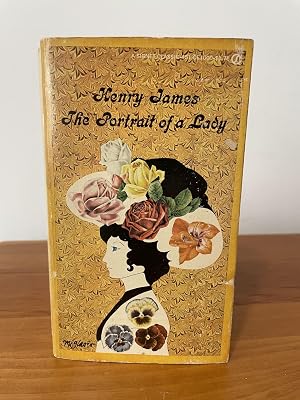
by Henry James, 1881
This book came from the Little Free Library at the Cooper Landing Library’s front porch. I had told Danette that I almost picked it up, and when we went back there a second time, Danette picked it up for me and for her, thinking it might be a good classic. I thought it was going to be good, but what a hard book! So many thoughts, words, emotions, dialogue that I didn’t understand. I kept going to the bitter end, wondering what Isabel Archer would do, hoping she would leave her devil of a husband, but the ending wasn’t clear. Was she returning to Rome to her horrible husband, or wasn’t she?
A beautiful young American travels to England with her Aunt Touchett, leaving behind a rich, young American, Caspar Goodwood, who loves her and wants to marry her. Caspar doesn’t give up – he follows her all throughout the book: to England, to Italy, and back to England in the end, offering to save her from her wretched life. However, there is another man – a rich, handsome, kind English Lord, Lord Warburton. He falls in love with her and asks her to marry him. She tells him no! Then, her uncle dies. His son, her loving cousin, Ralph Touchett, had asked his Dad, her uncle, to leave most of his fortune to Isabel. She becomes a rich, rich woman. She is manipulated by a pair of fortune-seekers, Madame Merle and Mr. Osmond, who has a sweet daughter, Pansy. Isabel thinks she is in love and marries Mr. Osmond. Her marriage is wretched. He hates Isabel. She is miserable. She then finds out that Madame Merle manipulated her to marry Osmond – that they are actually in cahoots with one another. She has been used and betrayed. She also finds out that Pansy is not really Mr. Osmond’s daughter; she is Madame Merle’s daughter.
Isabel runs to England to be at Ralph’s bedside as he dies. You think maybe she will leave her awful, emotionally cruel husband. But no, the ending is not clear. Did she return to Rome? Or is that not true? Never again will I read a Henry James novel. Here is the ending:
“Oh, good morning,” he said, “I was in hope I should find Mrs. Osmond.”
Henrietta kept him waiting a moment for her reply; but there was a good deal of expression about Miss Stackpole even when she was silent.
“Pray what led you to suppose she was here?”
“I went down to Gardencourt this morning, and the servant told me she had come to London. He believed she was to come to you.”
Again Miss Stackpole held him–with an intention of perfect kindness–in suspense.
“She came here yesterday, and spent the night. But this morning she started for Rome.”
Caspar Goodwood was not looking at her; his eyes were fastened on the doorstep.
“Oh, she started–” he stammered. And without finishing his phrase, or looking up, he turned away.
Henrietta had come out, closing the door behind her, and now she put out her hand and grasped his arm.
“Look here, Mr. Goodwood,” she said; “just you wait!”
On which he looked up at her.
THE END